
Amusement and Theme Parks - Market Size, Financial Statistics, Industry Trends
Amusement and Theme Parks Market Size
This report includes historical and forecasted market sizes and industry trends for Amusement and Theme Parks. It reveals overall market dynamics from 2021 through the present, and predicts industry growth or shrinkage through 2031. Revenue data include both public and private companies in the Amusement and Theme Parks industry.| Historical | Forecasted | ||||||||||
|---|---|---|---|---|---|---|---|---|---|---|---|
| 2021 | 2022 | 2023 | 2024 | 2025 | 2026 | 2027 | 2028 | 2029 | 2030 | 2031 | |
| Market Size (Total Revenue) | Included in Report |
||||||||||
| % Growth Rate | |||||||||||
| Number of Companies | |||||||||||
| Total Employees | |||||||||||
| Average Revenue per Company | |||||||||||
| Average Employees per Company | |||||||||||
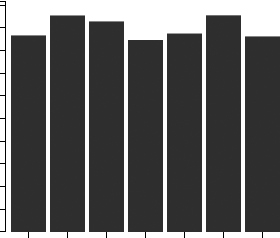
Industry Revenue ($ Billions)
Industry Forecast ($ Billions)
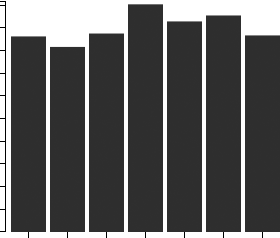
Pell Research's advanced econometric models forecast five years of industry growth based on short- and long-term trend analysis. Market size statistics include revenue generated from all products and services sold within the Amusement and Theme Parks industry.
Geographic Breakdown by U.S. State
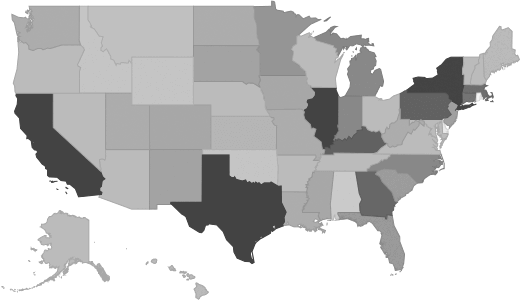
Amusement and Theme Parks market share by state pinpoints local opportunities based on regional revenue statistics. Growth rate for each state is affected by regional economic conditions. Data by state can be used to locate profitable and nonprofitable locations for Amusement and Theme Parks companies in the United States.Industry Revenue by State
Distribution by Company Size
| Company Size | All Industries | Amusement and Theme Parks |
|---|---|---|
| Small Business (< 5 Employees) | Included |
|
| Small Business (5 - 20) | ||
| Midsized Business (20 - 100) | ||
| Large Business (100 - 500) | ||
| Enterprise (> 500) | ||
Industry Income Statement (Average Financial Metrics)
Financial statement analysis determines averages for the following industry forces:- Cost of goods sold
- Compensation of officers
- Salaries and wages
- Employee benefit programs
- Rent paid
- Advertising and marketing budgets
The report includes a traditional income statement from an "average" Amusement and Theme Parks company (both public and private companies are included).
| Industry Average | Percent of Sales | |
|---|---|---|
| Total Revenue | Included |
|
| Operating Revenue | ||
| Cost of Goods Sold (COGS) | ||
| Gross Profit | ||
| Operating Expenses | ||
| Operating Income | ||
| Non-Operating Income | ||
| Earnings Before Interest and Taxes (EBIT) | ||
| Interest Expense | ||
| Earnings Before Taxes | ||
| Income Tax | ||
| Net Profit | ||
Average Income Statement

Cost of Goods Sold
Salaries, Wages, and Benefits
Rent
Advertising
Depreciation and Amortization
Officer Compensation
Net Income
Financial Ratio Analysis
Financial ratios allow a company's performance to be compared against that of its peers.| Financial Ratio | Industry Average |
|---|---|
| Profitability Ratios | Included |
| Profit Margin | |
| ROE | |
| ROA | |
| Liquidity Ratios | |
| Current Ratio | |
| Quick Ratio | |
| Activity Ratios | |
| Average Collection Period | |
| Asset Turnover Ratio | |
| Receivables Turnover Ratio | |
| Inventory Conversion Ratio |
Products and Services Mix
Product lines and services in the Amusement and Theme Parks industry accounting for the largest revenue sources.| Product Description | Description | Revenue ($ Millions) |
|---|---|---|
| Industry total | Included |
|
| Admissions to amusement parks, arcades, & family entertainment | ||
| Meals & bev, prepared/served/dispensed, for immediate consumption | ||
| Meals & non-alcoholic bev, prepared/served/dispensed, for immediate consumption | ||
| Resale of merchandise | ||
| Resale of merchandise - apparel & memorabilia merchandise | ||
| Resale of other merchandise | ||
| All other operating receipts | ||
| Parking services | ||
| Carnival games & rides | ||
Compensation and Salary Surveys
Salary information for employees working in the Amusement and Theme Parks industry.| Title | Percent of Workforce | Bottom Quartile | Average (Median) Salary | Upper Quartile |
|---|---|---|---|---|
| Management Occupations | 2% |
Included |
||
| Chief Executives | % | |||
| General and Operations Managers | 1% | |||
| Protective Service Occupations | 7% | |||
| Other Protective Service Workers | 7% | |||
| Food Preparation and Serving Related Occupations | 18% | |||
| Food and Beverage Serving Workers | 12% | |||
| Fast Food and Counter Workers | 9% | |||
| Building and Grounds Cleaning and Maintenance Occupations | 7% | |||
| Building Cleaning and Pest Control Workers | 6% | |||
| Personal Care and Service Occupations | 32% | |||
| Entertainment Attendants and Related Workers | 28% | |||
| Miscellaneous Entertainment Attendants and Related Workers | 26% | |||
| Amusement and Recreation Attendants | 25% | |||
| Sales and Related Occupations | 12% | |||
| Retail Sales Workers | 11% | |||
| Cashiers | 7% | |||
| Cashiers | 7% | |||
| Office and Administrative Support Occupations | 6% | |||
Government Contracts
The federal government spent an annual total of $40,417 on the Amusement and Theme Parks industry. It has awarded 8 contracts to 4 companies, with an average value of $10,104 per company.Top Companies in Amusement and Theme Parks and Adjacent Industries
| Company | Address | Revenue ($ Millions) |
|---|---|---|
Included |
||